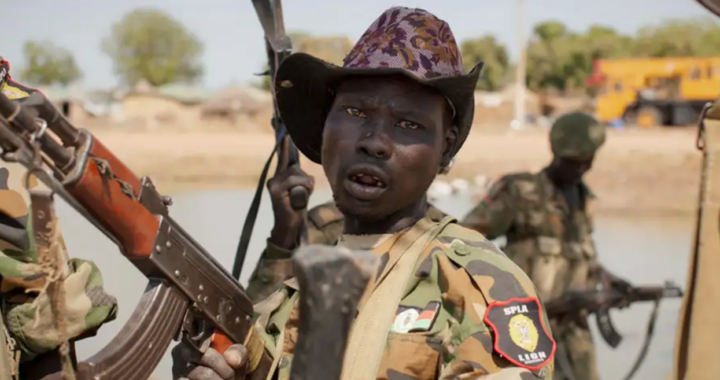
The political and security landscape of South Sudan has entered a period of profound uncertainty. The events that began in March 2025—when SPLM‑IO forces, supported by White Army elements, dismantled an SSPDF base in Nasir—marked a decisive rupture in the already fragile 2018 Revitalized Peace Agreement. What followed in Waat, Yuai, and Pajut only reinforced the perception that the agreement’s core commitments have eroded beyond repair.
These developments raise an unavoidable question: Is South Sudan witnessing the beginning of a new conflict, or the final unravelling of a peace that never fully took root?
A Peace Agreement in Decline
The 2018 agreement was designed to restore confidence between former adversaries, integrate forces, and lay the groundwork for national elections. Yet the resurgence of armed confrontations demonstrates that the political trust required to sustain such a framework has collapsed. The SPLM‑IO’s recent military posture suggests a movement acting from a position of confidence, while the involvement of the White Army—an unpredictable and loosely organized force—adds a volatile dimension that neither side can easily manage.
The government’s response has been cautious and slow. While officials have acknowledged the seriousness of the situation, there has been no clear articulation of a national strategy to restore stability. Instead, the state appears to be observing developments rather than shaping them. This approach risks allowing armed actors to define the trajectory of the conflict.
Government Options: Dialogue or Force?
At present, the government faces two broad choices:
renewed political engagement or military containment.
A return to dialogue remains theoretically possible. Regional bodies continue to call for de‑escalation, and the humanitarian situation demands urgent cooperation. However, the political environment is deeply polarized, and the detention of key opposition figures has further undermined confidence in the peace process. Without bold steps—such as reactivating peace mechanisms and engaging communities directly—the window for meaningful negotiation will continue to narrow.
A military response, while tempting for some, carries significant risks. The White Army’s decentralized structure makes it difficult to defeat through conventional operations, and a broader conflict would jeopardize national cohesion at a time when institutions are already strained.
The 2026 Elections: A Growing Uncertainty
South Sudan is scheduled to hold general elections in December 2026. Under current conditions, this timeline is increasingly unrealistic. Essential transitional tasks—including the permanent constitution, security arrangements, and population data—remain incomplete. Active fighting in several regions further complicates the possibility of voter registration, campaigning, and credible polling.
Unless the political leadership confronts these realities with honesty and urgency, the country risks entering an election cycle marked by instability, exclusion, and contested legitimacy.
The White Army Factor
One of the most troubling aspects of the current crisis is the unclear role and motivation of the White Army. Their demands are not widely understood, their leadership is diffuse, and their mobilization often stems from local grievances rather than national political objectives. This makes them an unpredictable actor whose actions can escalate tensions rapidly and complicate any attempt at negotiation.
Conclusion: A Nation at a Defining Moment
South Sudan stands at a critical juncture. The promise of the 2018 peace agreement has faded, but the future remains unwritten. The choices made in the coming months—by the government, the opposition, and regional partners—will determine whether the country steps back from the brink or enters a new and avoidable chapter of conflict.
The nation deserves clarity, decisive leadership, and a renewed commitment to peace. Without these, the fragile gains of the past years may be lost, and the hope for a stable, democratic future will become increasingly distant.
Add comment
Comments